Friday, October 23, 2009


Tuesday, October 20, 2009
Weight and politics
From Is Chris Christie too fat to win an election in New Jersey? - By Daniel Engber - Slate Magazine.
The last presidential election revealed a startling overlap between statewide obesity figures and support for the GOP. Despite losing in a landslide, John McCain carried all nine of the fattest states in the union and 16 of the top 20. (Obama prevailed in 17 of the 20 thinnest states, including New Jersey.)
Friday, October 16, 2009
Army meets recruiting goals for quantity, quality—but not honesty

From Army News Service. The army recently bragged about having met its recruitment goals the fiscal yearn ending September 30.
The Army and other services met their recruiting goals in fiscal year 2009, many exceeding both numeric goals and quality benchmarks for new recruits.The successful campaign was attributed by some to the poor job market.
'We are pleased to report that for the first time, since the advent of the all-volunteer force, all of the military components -- active and reserve -- met their number as well as their quality goals,' said Bill Carr, the deputy under secretary of Defense for military personnel policy during an Oct. 13 press conference at the Pentagon. 'That's the first time that's been achieved for every component since the start of the all-volunteer force in 1973.'
But Fred Kaplan in Slate notes that it had nothing to do with the job market.
According to the Pentagon's report, the Army's goal for fiscal year 2009 was to sign 65,000 new recruits. It actually signed 70,045—amounting to 8 percent more than the target.
But the picture is less bright than it seems. Though the Pentagon's report doesn't mention this fact, in each of the previous two years, the Army's recruitment goal was 80,000—much higher than this year's. The Army met those targets, but only by drastically lowering its standards—accepting more applicants who'd dropped out of high school or flunked the military's aptitude test.
This year, the recruiters restored the old standards—a very good thing for troops' morale and military effectiveness—but they signed up 10,000 fewer new soldiers.
It is, in other words, not the case that high unemployment or a new public spirit is leading more young men and women into the Army. It's not the case that more young men and women are going into the Army at all.
Thursday, October 15, 2009
Jim Rogers makes my head hurt - Paul Krugman Blog - NYTimes.com

From NYTimes.com. I love Paul Krugman!
After my talk in Seoul, I participated in a panel discussion on The Future. The summary doesn’t mention it, but I made notes on a comment by Jim Rogers, who was all “the West is in decline, everything’s going to Asia.” He was asked whether he was predicting that capital will start flowing into Asia — which he certainly seemed to be implying — and responded
“Well, capital has already been flowing into Asian economies, as you can see by the fact that they’re the world’s biggest creditors.”
Your homework assignment is to explain — in English — what’s wrong with that sentence.
Wednesday, October 14, 2009
Treating heroin addiction with heroin
From The New England Journal of Medicine.
Background. Studies in Europe have suggested that injectable diacetylmorphine, the active ingredient in heroin, can be an effective adjunctive treatment for chronic, relapsing opioid dependence.
Methods. In an open-label, phase 3, randomized, controlled trial in Canada, we compared injectable diacetylmorphine with oral methadone maintenance therapy in patients with opioid dependence that was refractory to treatment. Long-term users of injectable heroin who had not benefited from at least two previous attempts at treatment for addiction (including at least one methadone treatment) were randomly assigned to receive methadone (111 patients) or diacetylmorphine (115 patients). The primary outcomes, assessed at 12 months, were retention in addiction treatment or drug-free status and a reduction in illicit-drug use or other illegal activity according to the European Addiction Severity Index.
Results. The primary outcomes were determined in 95.2% of the participants. On the basis of an intention-to-treat analysis, the rate of retention in addiction treatment in the diacetylmorphine group was 87.8%, as compared with 54.1% in the methadone group (rate ratio for retention, 1.62; 95% confidence interval [CI], 1.35 to 1.95; P<0.001). The reduction in rates of illicit-drug use or other illegal activity was 67.0% in the diacetylmorphine group and 47.7% in the methadone group (rate ratio, 1.40; 95% CI, 1.11 to 1.77; P=0.004). The most common serious adverse events associated with diacetylmorphine injections were overdoses (in 10 patients) and seizures (in 6 patients).
Conclusions. Injectable diacetylmorphine was more effective than oral methadone. Because of a risk of overdoses and seizures, diacetylmorphine maintenance therapy should be delivered in settings where prompt medical intervention is available.
Everything is more complex than one expects
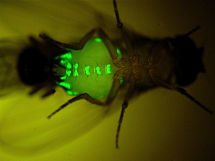
From The Scientist
Jean-Christophe Billeter from the University of Toronto at Mississauga and his colleagues genetically engineered adult Drosophila melanogaster without oenocytes, cells that secret hydrocarbons [pheromones]. …
Because pheromones have been generally believed to stimulate mating, Billeter and his colleagues expected that flies lacking hydrocarbons would be sexually unappealing to males. To their surprise, quite the opposite happened: wild-type males were hyperattracted to oenocyte-less flies. The wild-type males also ignored gender, choosing to mate with both unscented males and females over other wild-types. These results led the researchers to conclude that pheromones may not stimulate mating, but may instead act to slow down male mating attempts to allow the female to assess her partner's suitability. They also concluded that hydrocarbons help flies distinguish between sexes.
Billeter and his colleagues then tested the effect of individual pheromones on mate selection and copulation attempts. Researchers treated unscented D. melanogaster with wild-type levels of cVA, a hydrocarbon males are known to coat on females to deter further mating attempts. As expected, cVA effectively created a "chemical chastity belt," said Gompel.
Researchers then treated unscented flies with 7,11-heptacosadiene (7,11-HD), a pheromone thought to act as an aphrodisiac for flies. Although 7,11-HD alone did not stimulate additional mating attempts, when applied over cVA, it helped diminish the inhibiting effect of the compound, allowing females to broadcast their mating availability. The findings suggested that mating doesn't depend on just one pheromone relaying a message of availability, but instead on a complex mixture of attractive and aversive signals.
7,11-HD also seemed to act as a species barrier in mating. Unscented D. melanogaster females treated with the hydrocarbon attracted males of the same species, but deterred D. simulans and D. yakuba males.
"It's neat that one hydrocarbon (7, 11-HD) acts both as an aphrodisiac to males of D. melanogaster and also as a key compound causing males of other closely related species in the genus to reject her," said Tristram Wyatt, an evolutionary biologist at the University of Oxford. "It's surprising at first sight, but perhaps it's another example of evolution resulting in simple solutions, two effects for one."
Tuesday, October 13, 2009
Saving the universe from itself


From NYTimes.com.
[Holger Bech Nielsen, of the Niels Bohr Institute in Copenhagen, and Masao Ninomiya of the Yukawa Institute for Theoretical Physics in Kyoto, Japan] have suggested that the hypothesized Higgs boson, which physicists hope to produce with the Large Hadron Collider, might be so abhorrent to nature that its creation would ripple backward through time and stop the collider before it could make one, like a time traveler who goes back in time to kill his grandfather.
Monday, October 12, 2009
Frans de Waal: Morals Without God

Frans de Waal has a nice piece in the Huffington Post. Here's a piece.
The animal kingdom offers so many examples that I surely cannot summarize them here (see my new book, The Age of Empathy), but the interesting part is not so much whether animals have empathy and compassion, but how it works.His new book along the same lines is The Age of Empathy: Nature's lessons for a kinder society.
In one experiment, we placed two capuchin monkeys side by side: separate, but in full view. One of them needed to barter with us with small plastic tokens. The critical test came when we offered a choice between two differently colored tokens with different meaning: one token was 'selfish,' the other 'prosocial.' If the bartering monkey picked the selfish token, it received a small piece of apple for returning it, but its partner got nothing. The prosocial token, on the other hand, rewarded both monkeys equally at the same time. The monkeys gradually began to prefer the prosocial token. The procedures were repeated many times with different pairs of monkeys and different sets of tokens, and the monkeys kept picking the prosocial option showing how much they care about each other's welfare.
Saturday, October 10, 2009
Of Mice and Men

From NYTimes.com
For a while, it looked as if quercetin might be the next super-supplement, one of the few legal substances able to improve athletic performance. Quercetin is a flavonoid found naturally in apple skins, berries, red wine, black tea and some leafy vegetables. Like other flavonoids, it is believed to be an antioxidant, a substance that can lessen or prevent certain kinds of cell damage, and an anti-inflammatory. But of even more importance to athletes, it has shown evidence of being a potent performance enhancer in mice.A number of studies were done on humans. None of them showed similar results. The largest was done by the University of Georgia, financed by Coca-Cola, which was testing a new sports drink with quercetin.
In a representative animal study, published earlier this year, lab mice ran on a wheel or treadmill to gauge their fitness. Then some mice received large doses of quercetin for a week; others received a placebo. None of the rodents exercised. At the end of the week, the mice ran again. The quercetin mice were able to run as much as 37 percent longer than they had the week before. The placebo group showed no improvement. Meanwhile, analysis of the muscles and brains of some of the quercetin group showed new mitochondria — which help to produce energy — packing the cells. The placebo group had no new mitochondria. All indications, then, were that quercetin was energizing the mice at a fundamental, cellular level. …
The dosage of quercetin mimicked the amount given to mice, adjusted to human size. … At the end of [the study], the subjects were [tested], with provocative results. “There were simply no differences” between the quercetin and the placebo group, says Kirk J. Cureton, a professor of kinesiology at the University of Georgia and lead author of the study. The quercetin group didn’t ride farther before exhaustion. Their bodies showed no evidence of new mitochondrial production.
“We were surprised,” Cureton says. “Based on the mouse studies, we had expected” that the supplement would have a positive impact. Obviously, he continues, one study is not definitive. Different doses of quercetin or use for a longer time might lead to different results. “But my conclusion is that it just is not ergogenic in humans,” Cureton says. It doesn’t improve performance. “The moral is that you can’t generalize from mouse studies to humans.” And you can’t, as anyone who has followed sports nutrition should perhaps have learned by now, expect improved performance to be delivered, without effort, in pill or liquid form.
Monday, October 05, 2009
Whose buying US bonds?

David Rosenberg, Chief Economist & Strategist for Gluskin Sheff publishes a daily commentary on markets and the economy. It's always worth reading. Today it included this comment.
The latest data indicate that the Fed’s reserve creation showed through as cash on bank balance sheets ballooning $182 billion in September (+64 billion just in the last week) on the month to an all-time high of $1.076 trillion. The banks, instead of finding new creditworthy borrowers in private sector to lend to, are basically lending the Fed’s reserve creation right back to Uncle Sam. If you’re wondering who is funding the deficit – it is the major banks; they bought $31 billion of government bonds last week of September – bringing monthly pickup to $52 billion (fourth highest on record). …
The typical Wall Street economist sifts through the data like a robot, tweaking numbers here and there and basically doing little more than reporting what the numbers are doing but nowhere do we see adequate analysis over what is termed ‘behavioural economics’. The economists are so focused on the minutia or the background noise that they can’t see the forest past the trees. They can’t see that attitudes towards credit, homeownership and discretionary spending are undergoing a profound change. As they focus myopically on the ISM index, they don’t see that households now understand that they have to shrink their balance sheets and alter their budgets. This is a secular theme, which means that it will last years … (As an aside, and we have said this before, it is not about being a perma-bear or a perma-bull, but about being totally realistic and honest regarding what a post-bubble credit collapse world really looks like. Japan had no fewer than four of these massive rallies since its bubble burst and the Nikkei is still down more than 70% from its prior peak.)
While thrift is still considered a ‘bad thing’ by most economists who crave a consumer-led revival, we would be happy to open that for debate. It would be much more heartening to see a revival fuelled by capital investment but when over one-third of manufacturing capacity is sitting idle, that may be a stretch; and considering that exports comprise little more than 10% of GDP, the foreign sector is hardly going to be adding a whole lot of torque to the GDP data, at least over the intermediate term. Looks like we are left with government.
Subscribe to:
Posts (Atom)


